Monday, November 13, 2017

Earth Science Explore and Explain

In a group (with a partner):
  1. Consider the area of Earth’s surface, atmosphere, and weather about which you feel most knowledgeable. What ideas do you have regarding what you will do as a teacher to keep your knowledge current?
  2. Consider the area of Earth’s surface, atmosphere, and weather about which you feel least knowledgeable. What ideas do you have regarding what you will do as a teacher to continue to strengthen your knowledge base about this topic?
  3. What resources are you aware of that will help you be an effective teacher of Earth’s surface, atmosphere, and weather?

1. When considering the area of Earth's surface , atmosphere and weather I feel most knowledgeable about extreme weather and the ocean. I feel like extreme weather is commonly seen on the news and has been making the media a lot in the past decade. I am very interested in our oceans and I enjoy watching planet earth which many episodes are around our oceans. I like learning about the unexplored areas of our oceans and the animals that live deep beneath our surface.

2. When considering the area of Earth's surface, atmosphere and weather I feel least knowledgeable is about the Earth's surface and about fossils. These are both areas I would like to learn more about so I will feel comfortable teaching these concepts with my future students.

3. I know there are many resources that effectively help teachers became confident in teaching the Earth's surface, atmosphere and weather. You can watch videos on the topics or you can watch video that show other teachers teaching these concepts. There are science journals and magazines.


Check out my Earth Science Powerpoint!!

Thursday, November 9, 2017

Fieldwork Reflection-Skills/ Teaching


I really enjoyed teaching a whole class this semester, where as previously we taught one-on-one in a "tutoring" style. This was my first time teaching to a whole class and I really enjoyed it. I feel that teaching to the whole class showed me different challenges and skills I need that I did not need previously with the "tutoring" teaching styles. Keeping the whole class on task and focused was a new issue for me that I encountered. I learned the importance of assigning students their seats and their groups that are working in to maintain order. Teaching two lessons in one day was a little stressful because certain tasks took longer than I expected and I think I would have preferred teaching my two lessons and two different days. Teaching the first lesson presented some challenges such as not knowing how many students their would be, the level of ability of the students and what their prior knowledge on the subject was. Although this was at first stressful, it did really teach me the importance of incorporating many activities and being able to make changes to the activities to accommodate the students. Looking back now, I would have done things differently in my lessons I taught. I wish I did not play any videos and instead just showed the students pictures or a story to start the lesson and engage them. The videos were time consuming and gave the students more information then they needed if I was going to be using direct instruction to teach the concepts that were in the videos. The students really liked the Inquiry lesson and I wish I had more time during the inquiry lesson. I now have a better idea of activities and ways to introduce topics after teaching and watching my colleagues teach their lessons. Some of my colleagues are already teachers so I liked having the opportunity to watch how they teach and see the strategies they use.


Fieldwork Reflection

I really enjoyed the layout of this fieldwork. I liked teaching one day and the other day getting to watch my colleagues. I feel like it really gave my the opportunity to observe other teachers and their teaching styles. I was able to see what worked for them and how they chose to handle certain situations. Once while I was observing, two boys were distracting a whole table while the teacher was trying to teach. The teacher moved the students away from each other and I like they way they handled the two boys calling out throughout the lesson. One teacher would try to redirect the student, while listening to him and telling him to save his comment for the end. I liked seeing you other teacher taught and structured their lessons. Watching in this way really gave the observing teachers different ideas and we all built off each other's  lessons.
I learned a lot from this class while teaching including working with other teachers, time management skills and how to do an inquiry lesson. This was the first time in my field work teaching an entire class and I really enjoyed it. At first, I had reservations about only teaching one day and having to watch my colleagues for the other 3 lessons but I really enjoyed seeing everyone's take on the concept and material we were assigned to teach. Watching other teachers was very helpful to see how others structure their lessons and how they check for understanding throughout the lesson. Overall, I really liked the format of this class and being able to learn from my peers.

Saturday, October 21, 2017

Research Article Notes

"Exploring Multiple Representations In Elementary School Science Education" by Johnson, Moher, Ohlsson, & Leigh.

ImmersaDesk- A virtual reality learning strategy that provides external and internal models for student learning. The experiment was done in a school district in Oak Park, Illinois with 250 students grades 2nd through 12th. The long term goal of the study was the test in the ImmersaDesk, which is an advanced visualization technology helped improve science learning.

The two research questions being studied were:
  1. How does VR interact with the cognitive processes involved in learning, and how can we exploit this knowledge for the development of effective education interventions?
  2. How should VR be incorporated in the classroom, into current teaching practices, and into the life of the school? 
VR uses multiple means of representation that allows the learner to construct mental models to understand concepts.
  • Augmentation, explanation, prediction = through visualizations
  • Learner coordinates multiple mental models for more advanced learning and understandings.
Coordination of multiple models
  • allows for representation of; time, transformation, scale, part-whole, form function, abstraction and interpretation.
"Learners can construct a new mental model by mapping a novel system onto an already familiar one."

"Two representation are better than one"- helps learning come to life.

This method helps student learn;
  • Cognitive studies which involves coordination of multiple perspectives in the formation of mental models
  • Quick worlds- Augmenting existing classroom visualizations (textbooks, 3D models) to give more interactive visualization
  • Virtual Ambient allow students to better understand the Scientific Method. 
The Nature of Inquiry- Is seldom taught as a subject matter in it's own right but is a central learning goal.
  • VR provides access to stimulated environments
  • Allows students to make connections between the environment being studied and the scientific representation of data. 

Reflections:
When reading this article I immediately thought about the science lab simulations we read about a couple of weeks ago. These simulations allow for labs to be done that would often be hard to create in the classroom. The simulations allow students to guide their own learning and explore specific questions they have. I think lab simulations allow for more diverse learning because each student is able to follow their own inquiry instead of science labs that are done by the whole class and are aimed for one understanding or conclusion to be formed. I think this allows each student to be more engaged and develop a deeper understanding on a specific aspect that can then be shared and learned by all students. 


Saturday, October 14, 2017

Approaches of Instruction

"One of the purposes of education is to provide children with the skills and knowledge needed to function capably as adults. With the world changing rapidly, the abilities acquired in schools today need to be reassessed, as do the ways in which students are expected to learn ... And when the curriculum changes, ways in which the curriculum is delivered must change correspondingly. "

  Saskatchewan Education, 1985, p.6.

Teaching Models- Represent the broadest level of Instructional Practices

Strategies Vs. Methods

Strategies determine the approach to achieve a learning objective
Method- Specific ways of creating learning environments. How will the teacher and students be involved? How will they work together to achieve the learning objective and goals?


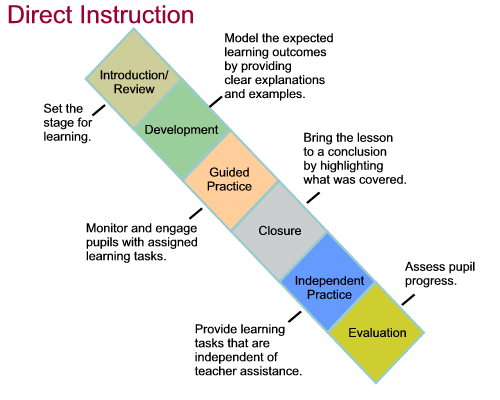
Direct Instruction is teacher directed. It involves lectures (20% of lesson time), guided practice and independent activities.


Indirect Instruction can use storytelling and oral tradition and is commonly used in ELA.


Inquiry- Students exploring a problem. Students found a problem, question and hypothesis and explore and experiment to form a conclusion and share their findings.


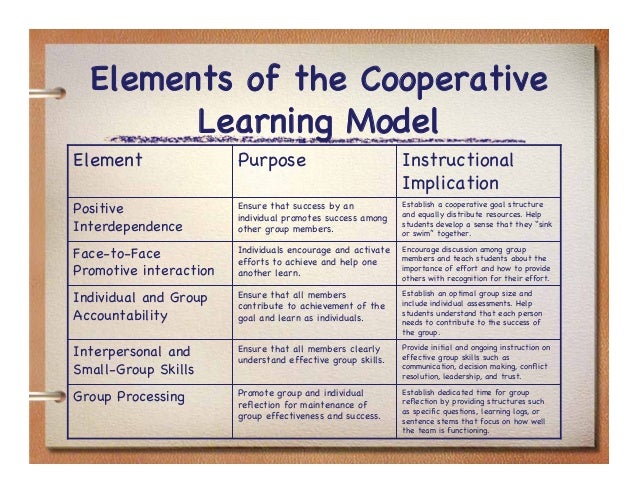
Cooperative Learning- Allows students to work together and build off each other's answers to answer questions and explore topics.


Independent Study- analyze problems reflect, make decisions and can be used in science journals.

Research Projects- can be done individually, with a partner or a groups. Students explore one problem or topic in depth.

Authentic Assessment- What can be assesses? Readiness, Interest and Learning Profile. Assessments can include pre-assessment, formative assessment and summative assessment.


Monday, September 18, 2017

The Scientific Method

The Scientific Method- Wesley Love- Presenter
A Universal Standard for Investigation


1. Observation
2. Question
3. Hypothesis
4. Method
5. Result
6. Conclusion

What is the Scientific Method?  - A tool of inquiry.
A logical serious of steps that allow you to move through the process.

Why is it important as a tool of investigation?
Ask a question-  do background research-  construct hypothesis - test with an experiment -analyze data and results  - hypothesis is true/false- REPORT RESULTS!

Questions to ask.
Control group? experimental group? why?

Step 1: "The Problem"
Step 2: Hypothesis   - an educated guess, intended explanation to the problem.
Step 3: Establish a "Method or Procedure"
  • Make a logical series of steps to test hypothesis and these steps produce a controlled experiment
  • Dependent variable happens based off of controlled variable. 
  • Need to clearly define variables and steps taken
  • Independent variable is the single issue you are examining.
  • Controlled group V. Experimental group. 
Experiments should be reproducible!

Step 4: Forming "Conclusions"
  • Negative conclusions- data does not support your original hypothesis
  • Positive conclusion- the data strongly supports your original hypothesis.
  • Summarize and evaluate your experiment. What would you do differently?
  • Suggest changes in the experimental procedure? Errors?
  • Random error- data results move around randomly- hard to eliminate. 


Saturday, September 16, 2017

Definitions of Sustainability
  1. To keep in existence; maintain.
  2. To supply with necessities or nourishment; provide for.
  3. To support from below
  4. To support the spirits, vitality, or resolution of; encourage.
  5. To bear up under; withstand: 
  6. To experience or suffer: 
  7. To affirm the validity of: 
  8. To prove or corroborate; confirm.

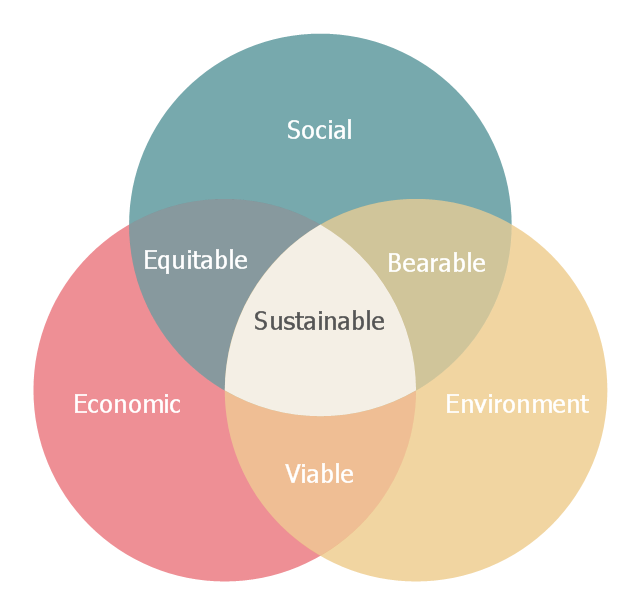
I interpret this diagram of sustainability to mean that there are many related components of sustainability. the diagram is based off of three main ideas; economic, social and environmental. These ideas are all related and share commons ideas such as equity, bearability, and viability and when we combine all of these elements we get sustainability. Sustainability I think is best  defined as "creating an economic system that provides for quality of life while renewing the environment and its resources. A sustainable community is one that resembles a living system where all of the resources (human, natural, and economic) are renewed and in balance for perpetuity."